
25 August 2026
Transitioning from Preschool to Primary School: Preparing for Mangawhai Beach School
Transitioning from Preschool to Primary School: Preparing for Mangawhai Beach School
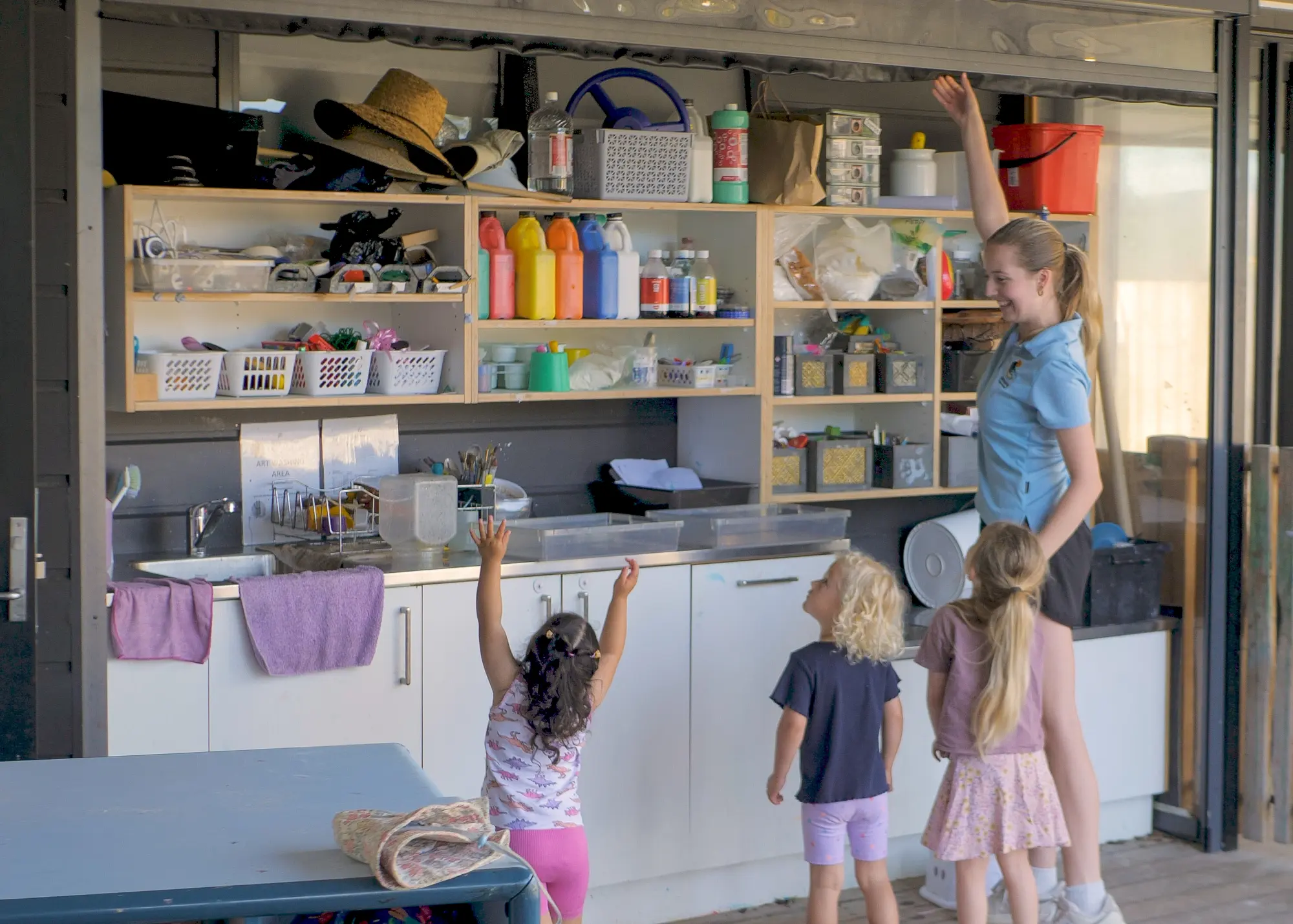
Starting school is a big shift, and most of what makes it go well has nothing to do with letters or numbers.
What does “school readiness” actually mean in New Zealand?
Parents often picture readiness as a checklist: knowing the alphabet, counting to twenty, maybe writing their name. That’s not what Te Whāriki, New Zealand’s early childhood curriculum, is built around, and it’s not what new entrant teachers say they’re actually watching for in those first few weeks.
Te Whāriki centres on children becoming confident, capable learners rather than kids who’ve memorised a set of facts before they’re five. On a Tuesday morning at school, that looks pretty practical. Can a child sit through mat time without needing constant redirection? Can they open their own lunchbox, or do they need an adult every single time? Do they know how to put their hand up and ask for help instead of sitting stuck and quiet?
Self-regulation comes first. If you ask any new entrant teacher, they’ll probably tell you the same thing. It’s about who can manage their own bag without being asked twice and who can follow instructions in a room of twenty other kids without needing to be chased constantly.
How does quality ECE prepare children for primary school?
Play-based learning can sometimes get treated like the opposite of “real” learning, which is not true. When a child spends forty minutes building a hut out of sticks and negotiating with the others over whose turn it is with the spade in the sandpit, they’re practising the exact kind of problem-solving skills a primary classroom demands every day.
But it’s important to remember, a good preschool shouldn’t completely leave out structure either. There’s a reason we run the same mat time and the same tidy-up song every day rather than mixing it up. It’s about predictability and creating positive habits for our kids. A task with a beginning and an end that a child has to complete on their own builds the same skills that a school day runs on, just without a bell schedule attached.
Interest-led play is another element that helps to build resilience for our tamariki as they naturally hit their own small problems and work them out for themselves, instead of being handed the answer. That’s a skill that doesn’t show up on a report but shows up in the classroom fast.
How Mangawhai Village Preschool supports the transition
Our older tamariki move into more structured group work in their final terms with us. Mat sessions get a bit longer and a bit more purposeful. We bring in simple games built around following instructions, and a child who’s shown interest in writing their name gets encouraged along at their own pace rather than on a set timetable everyone’s pushed through together. Even something like lining up to wash hands before kai becomes part of it, small and unglamorous, but it’s the same skill they’ll need.
None of it is a scaled-down version of school. It’s play with a bit more shape to it as children get closer to five.
We’re a short drive from Mangawhai Beach School, and our team knows their new entrant process well, including the pre-school visits that start around six weeks before a child’s fifth birthday and their cohort entry at the start of each term. If your child’s birthday falls mid-term, that timing catches a lot of families off guard, so we talk you through what it actually means for their start date before it becomes a scramble.
FAQs
My child can’t write their name yet. Should I be worried?
No! Writing readiness and school readiness aren’t the same thing.
When should we start talking to our child about starting school?
A term or so out is generally enough. Any earlier and it turns into something abstract they can’t really picture yet.
What if my child still has toileting accidents sometimes?
This comes up more than people expect, and it’s genuinely not the disaster it feels like in the moment. Talk to us and to the school ahead of time. Most new entrant classrooms have a low-key system for it, and plenty of five-year-olds have the odd accident in first term simply because they’re distracted by everything new happening around them. It settles fast once the novelty wears off.
How do I know if my child is ready?
Focus on the practical stuff over the academic stuff. Can they manage their own lunchbox? Can they sit through a story without needing to move every thirty seconds? Can they tell an adult when something’s wrong? If most of that’s a yes, they’re closer to ready than you think.
Come and see
Come and see the centre.
Half an hour on a tour, while the centre is busy. You are very welcome to bring your child along.